Evaluating Watercolor Swirls Digital Paper Patterns for Creative Projects
In the realm of digital crafting, selecting the right background assets can significantly influence the aesthetic quality and professional finish of a project. Among the myriad of options available to designers, scrapbookers, and sublimation artists, Watercolor Swirls Digital Paper Patterns has emerged as a notable resource. This collection offers a specific visual style that blends organic fluidity with structured geometric elements, providing a unique texture for digital and physical outputs. Understanding the nuances of this product is essential for creators who are evaluating whether it aligns with their specific design needs, workflow requirements, and budget constraints.
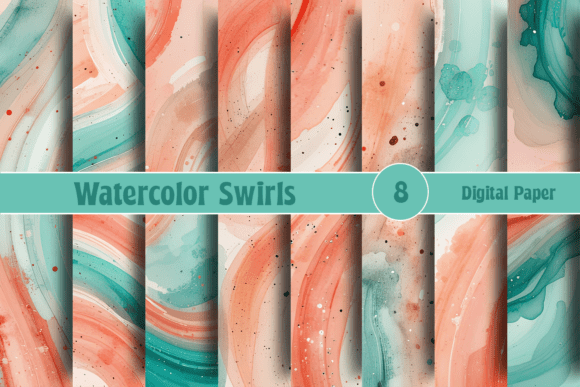
The core offering consists of eight high-resolution JPG files featuring hexagonal tile patterns overlaid with watercolor swirl effects. While the count may seem modest compared to bulk bundles containing hundreds of sheets, the value lies in the versatility and quality of each individual pattern. For users accustomed to purchasing extensive libraries, it is crucial to assess whether the depth of a large collection outweighs the focused utility of a smaller, higher-quality set. This analysis explores the characteristics of these digital papers, compares them against broader categories of digital assets, and helps determine the ideal use cases for this specific bundle.
Understanding the Product Structure and Format
Before diving into comparative analysis, it is important to clarify what constitutes this digital asset. When you purchase this item, you receive eight distinct JPG files. These are not vector files, nor are they layered PSDs; they are flat, high-resolution raster images. This distinction is critical for several reasons. First, it affects file size and loading times. Second, it dictates how the images can be manipulated within design software. Because they are JPGs, they do not support transparency unless edited further, which limits some immediate applications but simplifies others.
The requirement for a computer to unzip the files and a design program that supports PNG or JPG formats is standard for most digital downloads. However, this creates a barrier for mobile-only crafters or those using basic photo editing apps on tablets that may struggle with high-resolution files. Users must ensure their hardware can handle the resolution without lagging during zooming or layering operations. The "digital download only" nature means there is no shipping wait time, but it also requires immediate technical competence to access and utilize the files effectively.
The Aesthetic: Hexagonal Tiles Meets Organic Swirls
The visual identity of Watercolor Swirls Digital Paper Patterns is defined by its juxtaposition of structure and fluidity. The hexagonal grid provides a rigid, mathematical framework, often associated with modern, clean, or scientific aesthetics. In contrast, the watercolor swirls introduce softness, unpredictability, and artistic flair. This combination makes the patterns suitable for projects that require a balance between order and creativity.
For instance, a junk journal page might benefit from the structured background provided by the hexagons, while the watercolor elements add emotional warmth and visual interest. Similarly, in sublimation design, where backgrounds need to fill space without overwhelming the central subject, these patterns offer a sophisticated texture that is less generic than solid colors or simple gradients. The distinctiveness of this hybrid style sets it apart from purely abstract watercolor papers or strictly geometric tile patterns.
Comparative Analysis: Versus Bulk Bundles and Vector Assets
When evaluating Watercolor Swirls Digital Paper Patterns, it is helpful to compare it against two common alternatives: large-scale digital paper bundles and vector-based seamless patterns.
Bulk Digital Paper Collections
Many online marketplaces offer bundles containing 50, 100, or even thousands of digital papers for a similar or slightly lower price point. At first glance, these appear to offer better value. However, a deeper evaluation reveals significant trade-offs. Large bundles often suffer from inconsistency in quality, color palette coherence, and resolution. Many pages in such collections are low-resolution, making them unsuitable for print projects larger than a few inches. Furthermore, the sheer volume can lead to decision paralysis, where creators spend more time searching through irrelevant designs than actually creating.
In contrast, the eight-pattern focus of this bundle suggests a curated approach. Each file is likely optimized for specific uses, ensuring high resolution and cohesive styling. For a creator working on a specific theme—such as a series of gift wrap designs or a themed scrapbook album—the targeted nature of these eight patterns may be more efficient than sifting through a vast, uncurated library. The tradeoff is clear: you sacrifice variety for consistency and guaranteed quality.
Vector vs. Raster Formats
Another comparison point is the format itself. Vector patterns (SVG or EPS) allow for infinite scaling without loss of quality, which is advantageous for large-format printing or intricate cutting machine projects. However, watercolor effects are inherently difficult to replicate perfectly in vector form without losing the organic, bleeding look that defines the medium. Watercolor Swirls Digital Paper Patterns utilizes JPGs, which preserve the subtle gradients and texture variations of actual watercolor paint.
This makes these files superior for projects where the "hand-painted" feel is paramount. If a user’s primary goal is to create realistic-looking art prints or textured backgrounds for digital scrapbooking, the raster format is preferable. Conversely, if the user needs to resize a pattern repeatedly for different-sized tags or labels in a vector editing program like Adobe Illustrator, they would need to seek out vector-specific watercolor assets instead. The limitation here is scalability; once the image is stretched beyond its native resolution, pixelation will occur.
Best-Fit Situations and Practical Applications
Determining when to choose this specific bundle requires an honest assessment of your project types. The following scenarios highlight where Watercolor Swirls Digital Paper Patterns excels.
- Digital Scrapbooking and Junk Journaling: The hexagonal structure provides a nice backdrop for photos and journaling blocks, preventing the layout from feeling too chaotic. The watercolor swirls add a touch of elegance that complements vintage or romantic themes.
- Sublimation Backgrounds: For mug wraps, tumbler sleeves, or tote bags, a background pattern needs to be visually engaging but not distracting. These patterns offer a middle ground, adding texture without overpowering the main graphic element placed on top.
- Gift Wrap Design: The repetitive nature of the hexagonal tiles makes these patterns ideal for wrapping paper. When printed at home or via a local printer, the high resolution ensures crisp edges and vibrant colors, resulting in a professional-looking final product.
- Web and Social Media Graphics: For bloggers or social media managers, these patterns can serve as headers, post backgrounds, or story templates. The JPG format is universally compatible with web browsers and social media platforms, ensuring fast load times and broad accessibility.
However, there are situations where this product may not be the right choice. If you are designing for large-scale commercial printing, such as billboards or wall murals, the resolution of standard digital papers may be insufficient. In such cases, investing in custom vector work or ultra-high-resolution photography would be more appropriate. Additionally, if your design style relies heavily on transparency and layering effects directly in Photoshop, the lack of alpha channels in the JPG files might require additional editing steps to achieve the desired look.
Decision Factors: Cost, Convenience, and Quality
Ultimately, the decision to acquire Watercolor Swirls Digital Paper Patterns comes down to a balance of cost, convenience, and quality expectations. The price point is generally accessible, making it a low-risk trial for new digital crafters. The convenience of instant download and simple file management appeals to users who want to start creating immediately without dealing with inventory or shipping logistics.
From a quality perspective, the emphasis on high-resolution output is a key selling point. In an era where screen resolutions are increasing and print quality expectations are rising, having assets that remain sharp and detailed is invaluable. The specific aesthetic of watercolor swirls on hexagonal tiles is somewhat niche, which can be both a strength and a weakness. It stands out in a sea of generic floral or polka-dot patterns, offering uniqueness. However, it may not fit every design brief, particularly those requiring bold, geometric, or minimalist styles.
Technical Considerations for Implementation
To get the most out of this resource, users should consider their editing workflow. Since the files are JPGs, they are best used as base layers or background elements. Techniques such as adjusting opacity, applying blend modes (like Multiply or Overlay), or cropping sections of the pattern can enhance their versatility. For example, cropping a single hexagon from the pattern can create a repeating motif for smaller elements like buttons or badges.
It is also worth noting that color accuracy depends on the monitor calibration of the user. Digital screens can vary significantly in color representation, so what appears vibrant on one device may look muted on another. For print-bound projects, always perform a test print to ensure the colors match your vision before committing to a full run.
Conclusion
Watercolor Swirls Digital Paper Patterns represents a thoughtful, curated selection of digital assets designed for creators who value quality and specific aesthetic appeal over sheer quantity. Its blend of geometric structure and organic watercolor textures offers a versatile foundation for a wide range of projects, from digital scrapbooking to sublimation design. While it may not replace the need for comprehensive libraries or vector assets in all scenarios, it serves as an excellent specialized tool for enhancing visual depth and artistic flair. By understanding its strengths, limitations, and ideal use cases, creators can make an informed decision about whether this bundle fits into their creative toolkit.