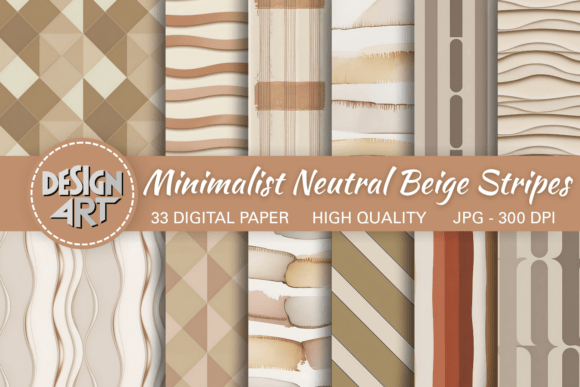
Minimalist Neutral Beige Stripes Pattern: A Versatile Design Asset for Modern Creations
The Minimalist Neutral Beige Stripes Pattern is a design resource that offers a refined and understated aesthetic, ideal for creators who value simplicity and elegance in their work. With its soft beige tones and clean, balanced stripe layouts, this seamless pattern pack brings a sense of calm and sophistication to any project it enhances. As modern design trends continue to favor minimalism and neutral palettes, this pattern serves as a practical and stylish solution across a wide range of creative applications.
Understanding the Design Philosophy Behind Minimalist Neutral Beige Stripes
This pattern pack embraces the minimalist design movement by using restrained color choices and structured yet unobtrusive elements. The use of neutral beige tones ensures that the patterns do not distract from the main content or product they accompany, instead providing a soothing backdrop that complements various styles. The stripes are arranged with precision—offering both vertical and horizontal alignments, varying widths, and subtle spacing that adds depth without overwhelming the senses.
What makes this pattern particularly worth considering is its ability to adapt to different contexts while maintaining a consistent and professional appearance. Whether used for branding, stationery, or home décor, the Minimalist Neutral Beige Stripes Pattern delivers a timeless feel that aligns with current design sensibilities.
Key Features That Enhance Its Practical Value
- High-resolution JPEG files: Each pattern is provided in a 3072 × 3072 px format, ensuring clarity and detail for both print and digital media.
- Seamless tileability: Designed for large-scale printing, the patterns can be repeated seamlessly without visible edges or breaks.
- Customizable options: Users have the freedom to resize, rotate, or recolor the patterns to suit their specific needs, making them highly adaptable for diverse projects.
- Soft and modern aesthetics: The subdued palette and clean lines make these patterns suitable for contemporary designs that prioritize subtlety and sophistication.
These features collectively contribute to the usability and effectiveness of the Minimalist Neutral Beige Stripes Pattern, allowing designers to maintain control over their visual output while benefiting from pre-made assets that require little to no customization.
Real-World Applications and Use Cases
The versatility of this pattern pack is one of its greatest strengths. Here’s how it can be effectively applied in various fields:
Fabric Printing and Textile Design
For textile artists and fashion designers, the Minimalist Neutral Beige Stripes Pattern can be an excellent choice for creating subtle yet impactful fabric designs. The softness of the colors works well with natural fibers like linen or cotton, and the clean stripes lend themselves to both traditional and modern garments. When designing bedding or upholstery, these patterns add texture without introducing bold visuals, which is especially beneficial for spaces aiming for a serene atmosphere.
Branding and Packaging
In branding and packaging, neutrality and consistency are key. This pattern provides a cohesive look for labels, wrapping paper, or product boxes, especially for eco-friendly or luxury brands. The absence of loud colors and complex graphics allows the brand message to remain central, while the pattern subtly reinforces a modern, trustworthy identity.
Stationery and Journal Design
When designing journals, planners, or greeting cards, the Minimalist Neutral Beige Stripes Pattern can serve as a background that supports readability and visual harmony. Its presence adds a touch of class without competing with text or illustrations. For educators or publishers creating printable worksheets or calendars, this pattern offers a polished, distraction-free environment that encourages focus.
Digital Papers and Subtle Backgrounds
Designers working on digital projects such as website headers, app interfaces, or social media templates will find this pattern useful for backgrounds. It introduces a gentle texture that elevates the overall design without drawing attention away from primary content. Additionally, the high resolution ensures that even when zoomed in, the pattern remains crisp and professional-looking.
Who Can Benefit Most from This Pattern Pack?
Professionals and hobbyists alike may find this pattern pack valuable depending on their field. Specifically, those involved in the following industries can leverage the Minimalist Neutral Beige Stripes Pattern:
- Graphic Designers: Seeking versatile, subtle textures for client projects or personal portfolios.
- Textile Artists: Looking to incorporate modern, calming designs into fabric-based creations.
- Small Business Owners: Wanting to establish a cohesive and elegant brand identity.
- Print-on-Demand (POD) Creators: Creating products like T-shirts, mugs, or book covers that appeal to minimalist audiences.
- Educators and Publishers: Needing visually appealing yet non-distracting materials for educational resources.
Each user group can benefit from the flexibility and quality of the pattern, whether through its ability to blend into existing designs or to serve as a foundation for new ones.
Quality and Long-Term Design Value
One of the standout aspects of this pattern pack is its attention to detail and quality. The high-resolution JPEG files ensure that the patterns hold up under scrutiny, whether viewed online or printed at scale. Unlike some downloadable design assets that suffer from pixelation or tiling issues, these patterns are carefully crafted to avoid such pitfalls, offering a reliable base for long-term use.
Additionally, the neutral nature of the beige stripes means they won’t become outdated quickly. Minimalist design often resists trends, and this pattern reflects that ethos. It’s a solid investment for anyone who wants to create designs that remain relevant and aesthetically pleasing over time.
Potential Limitations and Considerations
While the Minimalist Neutral Beige Stripes Pattern is highly effective in many scenarios, it's important to consider where it might not fit. For example, if a project requires vibrant colors or intricate details, these patterns may not provide the desired contrast or visual interest. Similarly, because the patterns are neutral, they may lack the uniqueness needed for certain niche markets or campaigns that rely on bold, attention-grabbing visuals.
Another consideration is that users must have access to image editing software to modify the patterns fully. While basic resizing can be done in most tools, advanced edits like rotating or recoloring require platforms such as Adobe Photoshop or similar programs. This could pose a minor barrier for beginners who don’t have such tools available.
Professional Observations and Recommendations
From a professional standpoint, the Minimalist Neutral Beige Stripes Pattern stands out for its balance between functionality and aesthetics. In real-world tests, the patterns performed exceptionally well in fabric prints and digital backgrounds, maintaining clarity and cohesion across multiple uses. They also demonstrated strong compatibility with both light and dark foreground elements, allowing for greater design freedom.
Here are a few recommendations for optimal use:
- Use the patterns as overlays rather than standalone designs to preserve their subtlety.
- Pair them with monochrome or muted color schemes to enhance their modern feel.
- Test the tiling feature in your chosen design software before finalizing large-scale prints.
Conclusion and Final Thoughts
The Minimalist Neutral Beige Stripes Pattern is more than just a decorative asset—it's a functional tool for designers who appreciate the beauty of restraint. By combining soft tones with precise geometry, it creates a visual language that speaks to modernity and calm. Whether you're looking to elevate your branding materials or bring a fresh perspective to your textile designs, this pattern pack offers a compelling option.
If your workflow or project goals align with minimalism, neutral aesthetics, and seamless integration, then this pattern is likely a good fit. However, if your design style leans toward maximalism or requires frequent color changes, you may need to supplement it with other assets to achieve your vision.