Retro Arcade Seamless Digital Papers: Strategic Applications for Nostalgic Branding and Creative Projects
In an era where visual saturation is the norm, capturing attention requires more than just clarity; it requires emotional resonance. For creators, entrepreneurs, and designers, tapping into shared cultural memories is one of the most effective ways to build immediate connection. This is where Retro Arcade Seamless Digital Papers emerge not merely as decorative assets, but as strategic tools for communication. These digital textures blend pixelated nostalgia, neon aesthetics, and geometric precision to create a cohesive visual language that speaks directly to audiences aged 20–50 who grew up with or are fascinated by the golden age of gaming.
However, using these assets effectively requires more than simply dropping an image into a design file. It demands a thoughtful approach to branding, user experience, and contextual relevance. When applied with intention, Retro Arcade Seamless Digital Papers can elevate invitations, digital products, web backgrounds, and physical print materials, transforming them from generic designs into immersive experiences.
The Strategic Value of Nostalgia in Modern Design
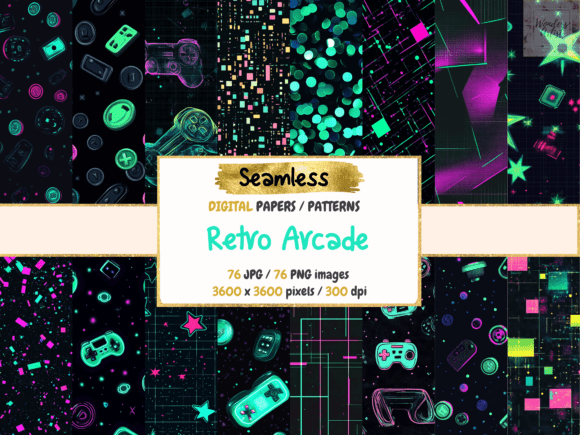
Nostalgia is a powerful psychological trigger. It evokes feelings of comfort, excitement, and simplicity. For businesses and content creators, leveraging this emotion can lower barriers to engagement. The Retro Arcade Seamless Digital Papers collection capitalizes on this by offering high-resolution, tileable patterns that evoke the electric atmosphere of 1980s arcades. These are not random graphics; they are structured compositions featuring glowing neon lines, 8-bit motifs, checkerboard patterns, and circuit board textures.
From a branding perspective, these papers serve several critical functions:
- Instant Contextualization: A single background pattern can immediately signal the theme of a project without the need for excessive copywriting. If you are launching a retro-themed event, a vintage-style app, or a nostalgic marketing campaign, these papers do the heavy lifting of setting the mood.
- Visual Hierarchy: The bold geometric patterns and vibrant colors inherent in arcade aesthetics can be used to guide the eye. By placing text or key call-to-action elements over specific sections of the seamless paper, designers can create contrast that improves readability and focus.
- Brand Differentiation: In markets saturated with minimalist, flat-design trends, incorporating rich, textured, and colorful retro patterns can help a brand stand out. It signals creativity, playfulness, and a willingness to engage with pop culture.
Practical Use Cases Across Industries
To maximize the return on investment for your creative efforts, it is essential to understand where Retro Arcade Seamless Digital Papers fit best. Below are strategic applications across various professional domains.
Event Marketing and Invitations
For entrepreneurs hosting launch parties, game nights, or themed corporate events, these digital papers offer a cost-effective way to produce high-impact printed materials. Whether creating physical invitations, table tents, or banner stands, the seamless nature of the JPG files allows for easy scaling without loss of quality. The neon glow and pixel grids instantly communicate "fun" and "retro," reducing the cognitive load on the attendee to understand the event's vibe.
Planning Tip: When designing invitations, ensure sufficient negative space or use semi-transparent overlays for text. The intricate details of circuit boards or dense pixel grids can compete with typography if not balanced correctly. Choose lighter variants of the paper for text-heavy documents and darker, high-contrast versions for headers or borders.
Digital Product Enhancement
Freelancers and educators selling digital downloads—such as planners, worksheets, or online course modules—can use these papers to add value and aesthetic appeal. A standard PDF planner becomes a premium product when wrapped in a custom cover featuring Retro Arcade Seamless Digital Papers. Furthermore, for bloggers and publishers, these images serve as excellent featured images or section dividers, breaking up long-form content with visually stimulating breaks that encourage scrolling.
Decision-Making Guidance: Consider your target audience’s device usage. Ensure that the chosen pattern does not cause visual vibration on mobile screens. High-frequency patterns (like tight checkerboards) can sometimes cause moiré effects on certain displays. Test your designs on multiple devices before finalizing.
E-commerce and Packaging Design
Small business owners in the retail sector can leverage these textures for packaging inserts, gift tags, or website banners. For brands targeting gamers, hobbyists, or the millennial/Gen X demographic, these papers reinforce brand identity. They suggest that the brand understands its customer’s interests and values authenticity over sterile corporate imagery.
Technical Considerations and Workflow Integration
The availability of these assets in JPG format provides flexibility, but it also comes with specific technical considerations. Unlike vector formats (SVG or AI), JPGs are raster-based. This means that while they are versatile for web and print, they have limitations regarding scalability and editability.
- Resolution Management: Always verify the DPI (dots per inch) of the downloaded files. For high-quality print projects, ensure the resolution is at least 300 DPI. For web use, 72–150 DPI is typically sufficient. Using low-resolution files in print projects will result in pixelation, undermining the "premium" feel you are trying to achieve.
- Seamless Tiling: The core value of "seamless" papers is their ability to repeat without visible seams. When using these in design software like Adobe Photoshop or Illustrator, utilize the pattern fill features rather than manually copying and pasting the image. This ensures a uniform texture across large surfaces like website backgrounds or full-page brochures.
- Color Profile Consistency: RGB colors (used for screens) often appear brighter than CMYK colors (used for print). Neon greens and electric blues may look duller in print. Before finalizing any print order, convert your design to CMYK and adjust the brightness of the Retro Arcade Seamless Digital Papers to compensate for the color shift.
Risks and Pitfalls to Avoid
While powerful, these assets are not a substitute for good design principles. Misuse can lead to cluttered, unprofessional results. Here are common risks to mitigate:
- Overstimulation: The primary risk of using neon and pixel-heavy designs is visual fatigue. If every element of a layout uses a high-intensity retro pattern, the user will struggle to find a focal point. Use these papers as backgrounds or accents, not as the sole visual element everywhere.
- Inappropriate Context: While fun, retro arcade aesthetics may not suit all industries. A law firm, healthcare provider, or financial institution might find these patterns too informal or distracting. Assess your brand voice carefully. If your goal is to convey trust, stability, and seriousness, these papers may undermine your authority. Reserve them for brands that align with creativity, entertainment, technology, or youth culture.
- Lack of Accessibility: Ensure that text placed over these patterns meets accessibility standards (WCAG). The contrast between the text and the busy background must be sufficient for users with visual impairments. Use solid color blocks or drop shadows behind text to improve legibility.
Maximizing Long-Term Value
To get the most out of Retro Arcade Seamless Digital Papers, integrate them into a broader creative strategy. Do not treat them as isolated decorations. Instead, view them as part of a cohesive visual system. Pair them with complementary fonts (such as chunky pixel fonts or clean sans-serifs for contrast), consistent color palettes, and aligned messaging.
For marketers, consider A/B testing different variations of these papers. Does a dark, cyberpunk-inspired grid convert better than a bright, pastel-colored 8-bit pattern? Data-driven decisions will tell you which version resonates most with your specific audience. Over time, you can build a library of preferred styles that become synonymous with your brand’s identity.
Furthermore, think about versatility. Can these patterns be adapted for seasonal campaigns? A green-tinted circuit board might work for a tech conference, while a pink and purple neon grid could be perfect for a summer music festival. The adaptability of these seamless papers allows for year-round relevance without requiring constant new asset creation.
Conclusion
Retro Arcade Seamless Digital Papers are more than just pretty pictures; they are strategic assets that bridge the gap between past and present. By understanding their technical properties, respecting their aesthetic impact, and applying them with clear goals in mind, creators and professionals can produce work that is both visually striking and commercially effective. Whether you are enhancing a digital product, designing a memorable invitation, or refreshing your brand’s visual identity, these papers offer a reliable path to engaging your audience through the universal language of nostalgia. Approach them with intention, balance them with strong typography and layout, and let them help you tell your story with energy and clarity.